
Measles
Measles
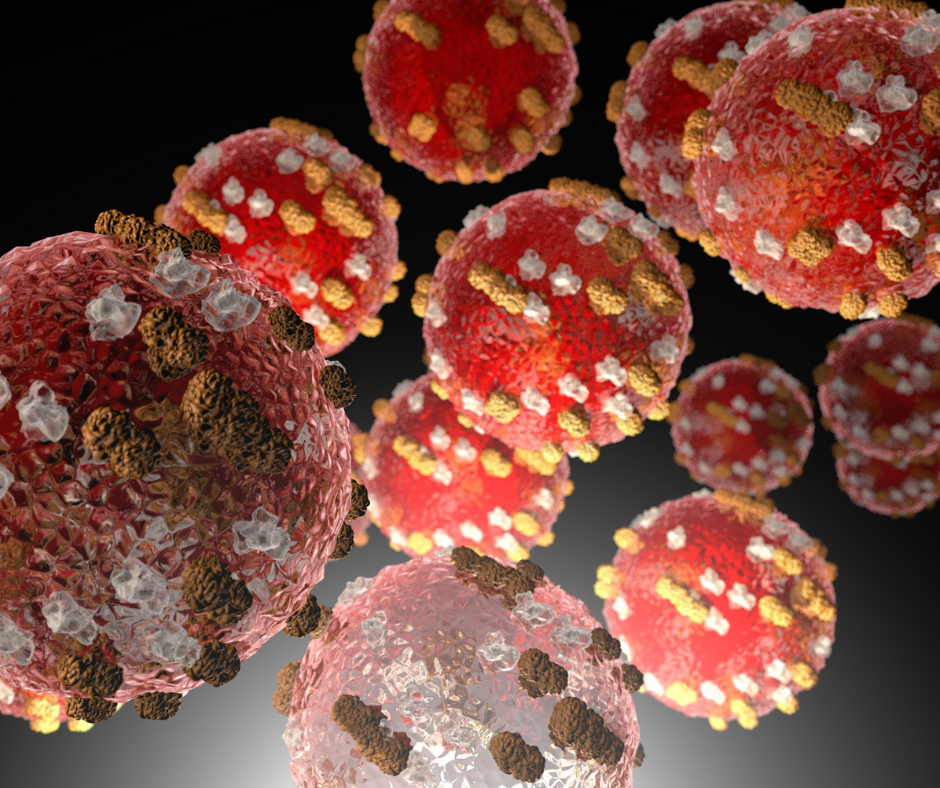
Some people think of measles as just a little rash and fever that clear up in a few days. But measles can cause serious health complications, especially in children younger than 5 years old.
Measles is highly contagious. If one person has it, up to 9 out of 10 people nearby will become infected if they are not protected.
Centers for Disease Control
Benton County Health Department is working with Oregon Health Authority, local medical providers, and other local community partners and health officials to monitor and prevent spread through community outreach and education.

Current Situation
No confirmed measles cases have been reported in Benton County.
There are reported measles cases in Oregon during 2026. Visit the Oregon Health Authority’s (OHA) measles page for more information on the current situation in Oregon.
On this page:
About Measles
Measles is not just a rash. It is a serious disease that is dangerous and in rare cases can be deadly. Measles is very contagious, meaning it spreads from person to person easily. Unvaccinated people are likely to get measles if they are exposed.
Measles can have serious outcomes:
- One out of every four people with measles will need to be hospitalized.
- One out of every three people will suffer complications such as an ear infection, a lung infection (pneumonia), and in rare cases, inflammation of the brain (encephalitis).
- For every 1,000 children with measles, one to three will die from it.
- If you are pregnant and have not been vaccinated, measles may cause birth too soon or may cause you to have baby that is too small.
Measles can be serious in all age groups. However, there are several groups that are more likely to suffer from measles complications:
- Children younger than 5
- Adults older than 20
- Pregnant people
- People with compromised immune systems, such as from leukemia or HIV infection
Signs and Symptoms
Symptoms usually develop within one to two weeks after being exposed. Rarely, it can take up to three weeks (21 days) for symptoms to appear. Symptoms can include:
- High fever
- Cough and runny nose
- Red eyes
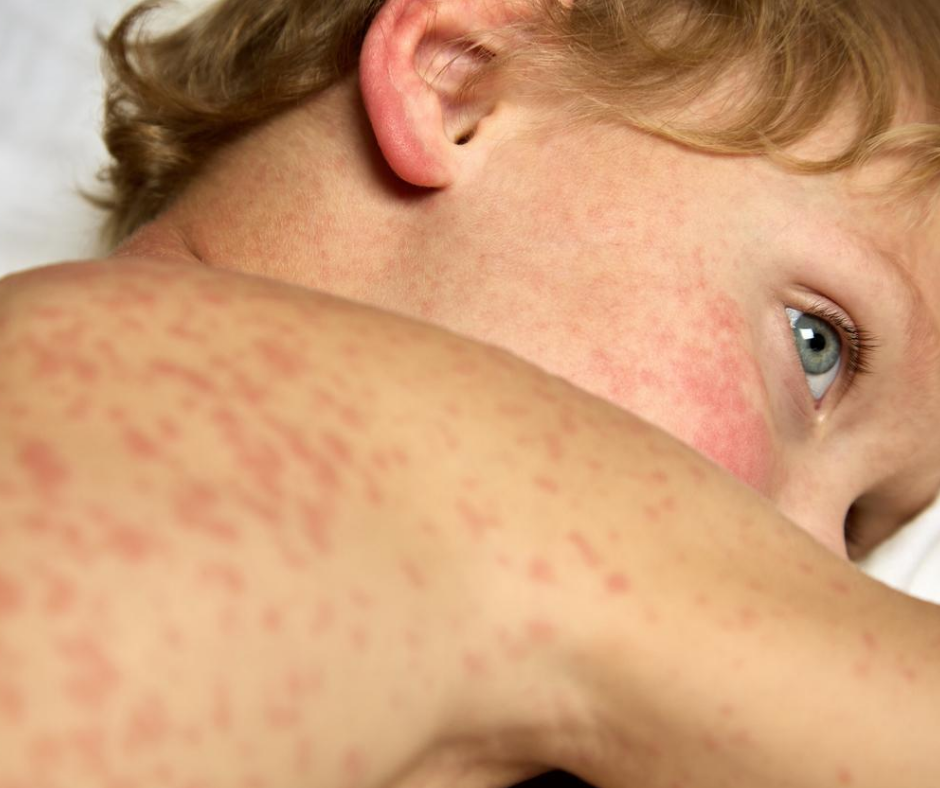
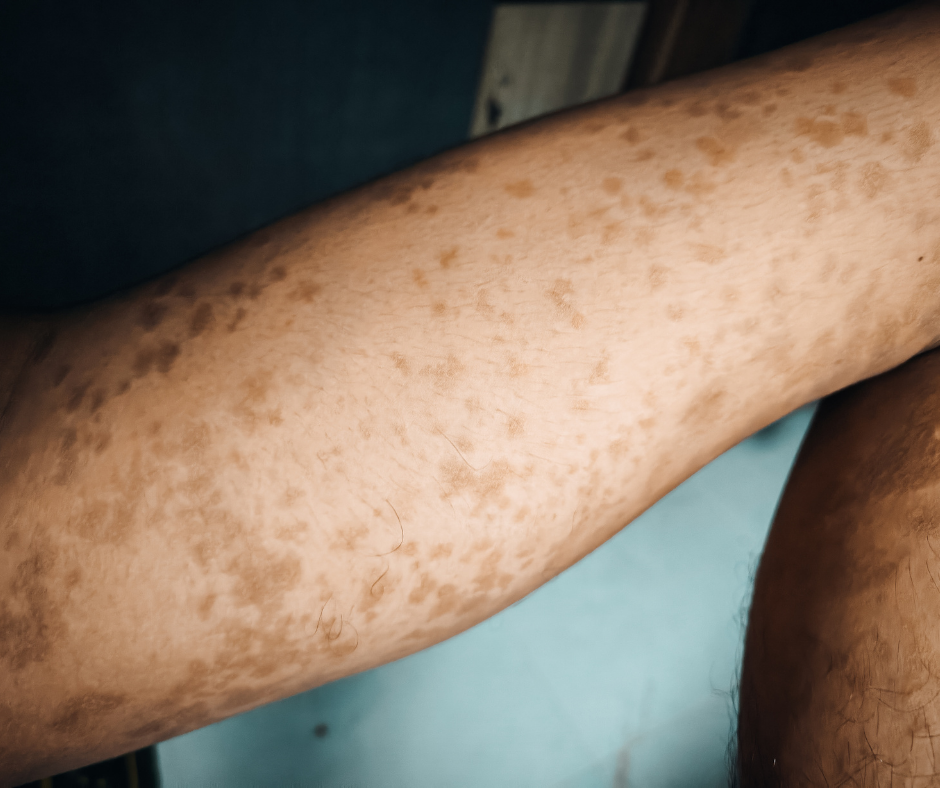
- A red rash that starts on the head and face and spreads to the rest of the body
Immunity
You are protected from measles if:
- You are under age four and have had one dose of the measles, mumps, and rubella vaccine.
- You are four or older and have had two measles vaccines.
- You were born before 1957.
- You have a blood test that shows you are immune.
Spread or Transmission
In most cases, measles spreads when a person with measles breathes out, coughs, or sneezes. People can spread measles after they have been exposed, but before they have any symptoms. People are contagious with measles four days before the rash appears and four days after it goes away.
You can get measles just by being in a room where a person with measles has been. This can happen even up to 2 hours after that person has left.
A person who has never had a measles vaccine or a case of measles has a 90 percent chance of catching the disease if they are near an infected person.
Before the measles vaccination program started in 1963, an estimated 3 to 4 million people got measles each year in the United States. Since then, widespread use of measles vaccine has led to a more than 99% reduction in measles cases compared with the pre-vaccine era.
- Of these, about 500,000 (half a million) cases were reported each year to the CDC.
- Of these, 400 to 500 people died, 48,000 were hospitalized, and 1,000 developed encephalitis (brain swelling) from measles.
Impact On Schools and Childcare Programs
Just one measles case in a K-12 school or childcare setting can have a major impact on schools and families. Any unvaccinated student or staff member who is exposed to measles will be excluded from school and childcare for 21 days or more. (This exclusion is required under Oregon Administrative Rules (OAR 333-019-0010).)
It is important that families know which vaccines are required and that children who do not get them may be required to stay home. Getting the MMR vaccine is still the most effective way to prevent measles from spreading, and to avoid long disruptions to education and childcare services.
Vaccination
The best way to protect yourself and your family from measles is to make sure you are up to date on MMR (Measles, Mumps, and Rubella) vaccine. MMR vaccine is a very safe and very effective vaccine. It protects against measles, mumps and rubella.
Doctors recommend that all children get the MMR vaccine, and adults should get one if they didn’t have one as a child. To check your vaccination status, talk to your doctor or health clinic. Health care providers can determine whether people are immune to measles based on their vaccination record, age, or laboratory evidence of prior infection.
If you need help finding a vaccine, call:
- Your regular medical provider
- Retail pharmacies, including pharmacy counters inside grocery stores, which can vaccinate children 7 years and older.
- School-Based Health Centers:
- Lincoln Health Center: (541) 766‑3546
- Monroe Health Center: (541) 766‑6000
- Benton County Health Department: (541) 766‑6835
If You Think You or Your Child/Family Member has Measles
If you think you have been exposed or if you have any symptoms of measles, call your health care provider and stay home and away from others who are not immune. Because measles is a reportable disease, your local public health department will be involved in helping prevent its spread. They will tell you when you can go back to work or school.
Always call first! Call before you go to a clinic to make arrangements, so you don’t spread the virus to others. Calling ahead allows healthcare staff to plan for safe entry and helps prevent potential exposure in waiting rooms.
Public Health is Preventing Spread
Public health departments track and monitor people who have been exposed to measles, help them if they get sick, and help make sure they don’t give measles to others.
Measles is a reportable disease. This means that when a doctor thinks a patient might have measles, they must report it to the local public health department and the Oregon Health Authority. The local public health department confirms a possible measles case and ensures access to appropriate testing.
The local public health department works closely with the sick person as soon as measles is suspected. They try to find out where the person might have caught measles and where else they might have gone where they may have exposed others. This is called case investigation.
If the person spent time around others while they were contagious with measles, the public health department may need to share that information directly with the people who might have been exposed, such as family members or schools.
If the sick person visited public places like a shopping center or the airport, public health shares that information with the public so they can protect themselves. Public health will not share the sick person’s protected health information (PHI), such as their name, date of birth, or contact information with the public.
The local public health department also helps people stay at home and away from others and checks in with them to track their health. This is called active monitoring.
Community Partner Resources
For the most up to date data and resources, visit the following links: